
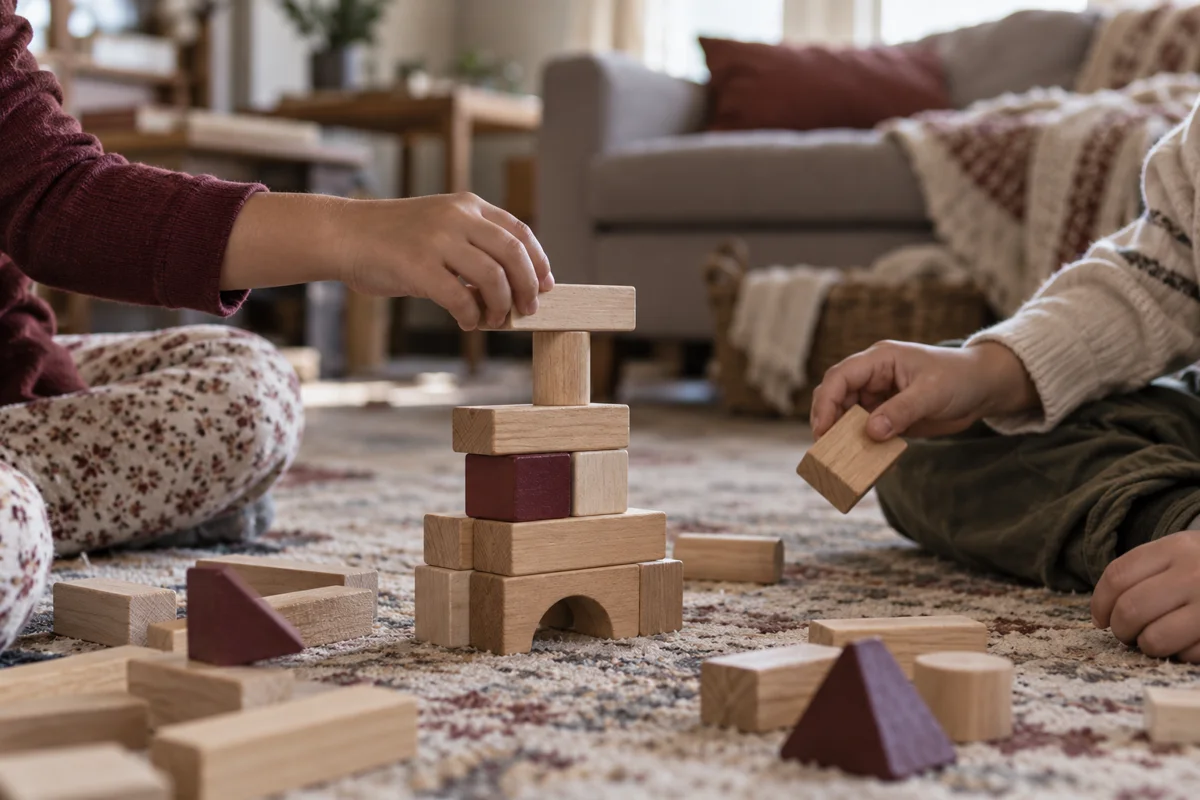
Start with the child, not the program
ABA should not look identical for every child. A thoughtful plan begins with who your child is: how they communicate, what they enjoy, what feels difficult, what helps them learn, and what matters to your family.
The goal is not to make a child look less autistic or more convenient to the adults around them. The goal is to build useful skills, reduce barriers, and help the child participate in life with greater safety, independence, and connection.
Teaching should feel connected to everyday life
Real-life ABA uses natural moments as opportunities to learn.
Communication can be practiced while choosing a toy or asking for help. Flexibility can be supported during a small change in routine. Independence can grow while putting on shoes, cleaning up, or preparing a simple snack. Social learning can happen during genuine play, not through forced interaction that ignores the child’s comfort.
Skills taught during therapy should gradually become available with different people, in different places, and when no one is giving a formal instruction. Clinicians call this generalization. Parents usually call it: “They can actually use it.”
Relationship comes before demands
Children learn best with people they trust.
A behavior technician should spend time discovering what your child likes, noticing their communication, and becoming someone whose presence feels safe and positive. A child does not need to earn warmth, respect, or access to basic comfort.
Good therapy also pays attention to assent, including the ways a child communicates willingness, hesitation, discomfort, or the need for a pause. Every difficult moment should be noticed and understood.
Parents should be partners, not replacement therapists
Your insight is essential. You know which routines are hardest, which changes would matter most, and what works differently on a tired morning or a busy evening.
Parent partnership should give you understanding and practical support. It should not leave you feeling judged, blamed, or responsible for running a therapy program every hour your child is awake.
The most useful guidance is realistic enough to fit your home. A strategy that only works in a perfectly quiet room is not yet a real-life strategy.
Clinical quality should be visible
Quality ABA is not simply a friendly technician arriving on time. Behind each session should be active clinical thinking.
The BCBA should observe regularly, review data in context, support the technician, listen to family feedback, and adjust the plan when something is not working. Data matters, but numbers should help the team understand the child. They should not replace what the child and family are communicating.
- What are we teaching, and why does it matter?
- How will this help outside of therapy?
- How do you know whether the approach is working?
- What will you change if my child is distressed or not progressing?
- How are you supporting the technician who works with my child?
Progress may look ordinary and still be deeply meaningful
Some of the most important progress will not look dramatic on video. It may look like getting through toothbrushing with less distress. Waiting a little more comfortably. Calling a parent from another room. Joining a sibling for thirty seconds longer. Recovering from disappointment without losing the entire afternoon.
These moments matter because they belong to your child’s real life.
This article provides general educational information and is not a substitute for individualized clinical or medical advice.