
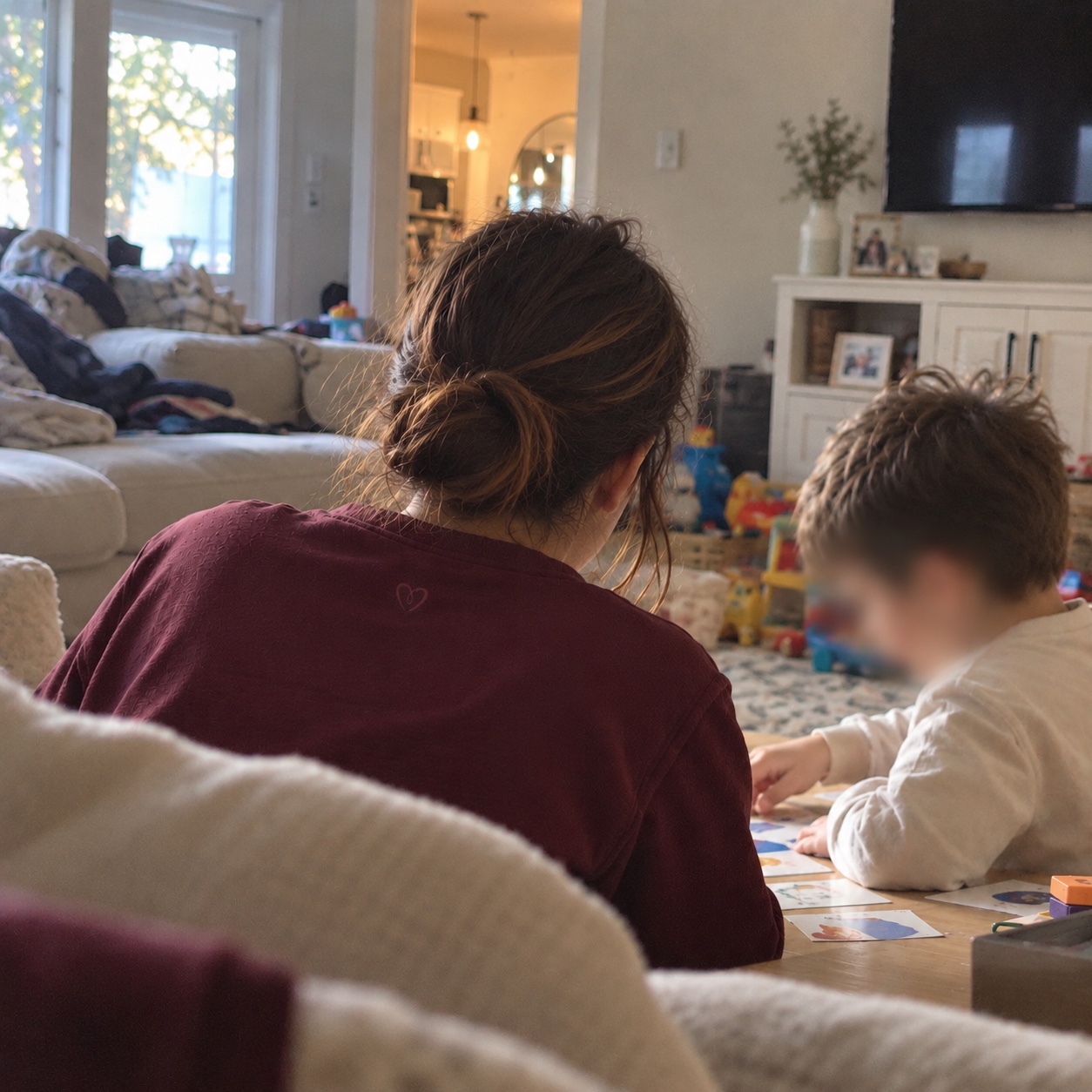
First, the therapist connects
Especially at the start of care, a behavior technician may spend time following your child's interests, playing, observing, and learning how your child communicates. A quieter first session does not mean nothing is happening. Building a comfortable relationship helps the therapist teach in a way your child can use.
Teaching can happen in ordinary moments
A snack can offer a chance to ask for help or make a choice. Play can create opportunities to take turns or try a new idea. Getting ready to leave may be the right time to practice a transition. Sometimes a brief, more structured activity is useful, too. The BCBA chooses and adjusts teaching based on your child's goals and response.
Your child should have breaks, preferences, and ways to show when something feels difficult. The aim is useful participation, not a performance for the therapist.
What is the parent expected to do?
You do not need to run the session or entertain the therapist. It helps to share what the day has been like, mention a routine you want support with, and speak up when an approach does not fit your family. The BCBA can show you practical strategies to use between sessions without making every family moment feel like therapy.
How do we know it is working?
The team should be able to tell you what it is teaching, how it is tracking progress, and whether a skill is showing up outside the session. A meaningful change may be a clearer request, an easier transition, or more independence in a familiar routine. The BCBA reviews progress and changes the plan when needed.
- What will today's session focus on?
- How will this skill help during our regular day?
- Who should I tell if something is not working at home?
This article provides general educational information and is not a substitute for individualized clinical or medical advice.